
By Jetstar Plumbing and Drains
A sewer camera can show visible conditions inside an accessible pipe, including accumulated material, root intrusion, displaced connections, and standing water. It can help explain why a drain backup returns after flow is restored. It cannot see clearly through opaque wastewater or establish every condition outside the pipe. For a Pleasant Grove homeowner, an inspection is evidence about the viewed section rather than a complete explanation by itself.
The camera's usefulness depends on access, visibility, and interpreting the image in context. A clear view of a defect can guide a service decision, while an obscured view may leave questions unresolved. Ask what was actually seen and which conclusions remain uncertain.
What the equipment can reveal inside a pipe
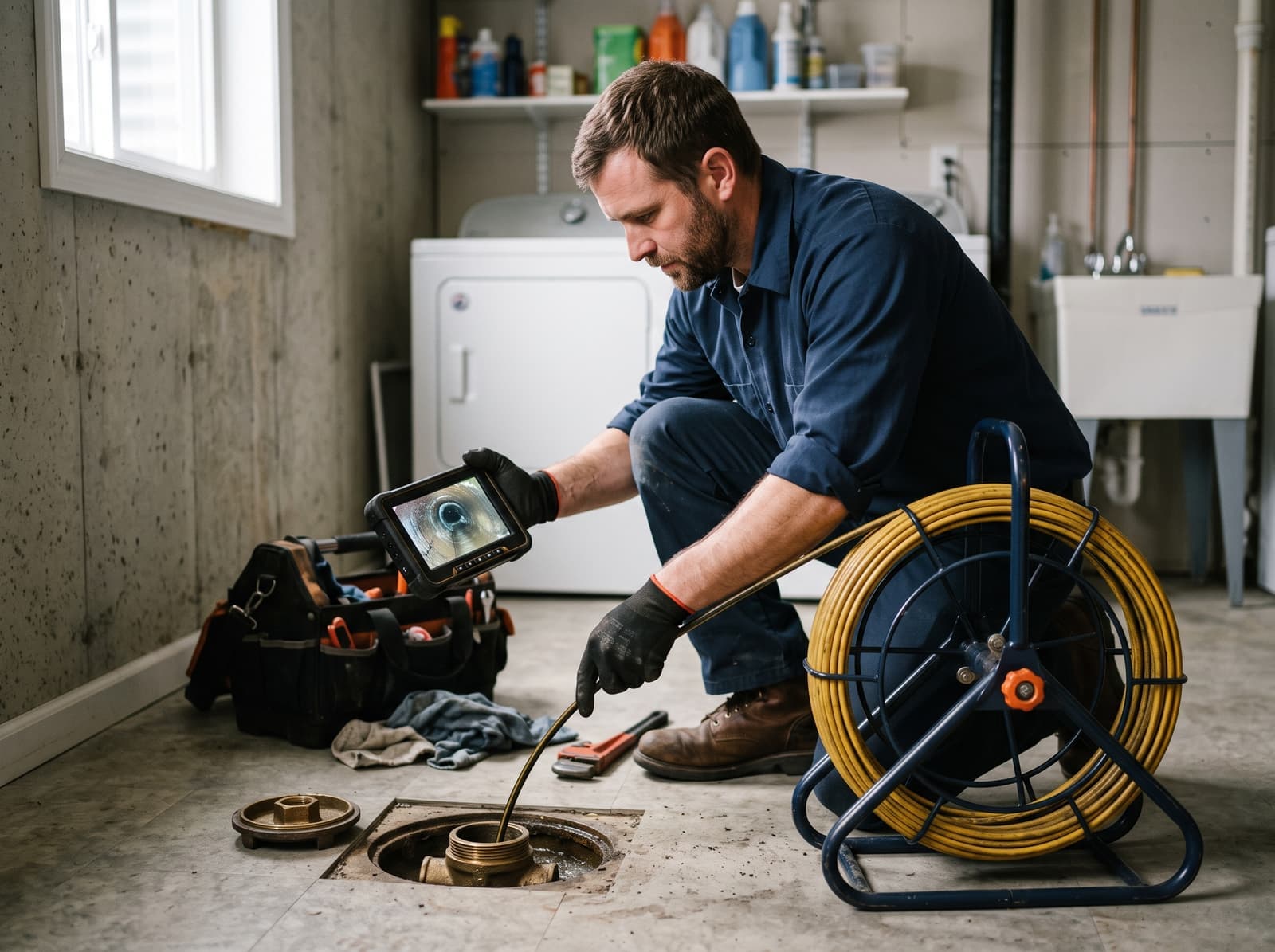
A sewer inspection camera uses a camera head, its light and a flexible push cable to view the pipe from a suitable access point. A cleanout is a capped opening intended for service access. The operator advances the head through the accessible route and compares what appears on the monitor with the backup pattern. The camera cannot reveal a surface hidden by wastewater or debris.
Roots enter through an opening or vulnerable connection rather than growing through an intact pipe wall without a route. Once inside, they can catch debris and narrow the passage. Accumulated deposits can reduce usable pipe area, while a displaced joint can create a ledge where material collects.
Standing water may suggest a low point or obstructed flow, but the image alone needs context. The inspector must consider whether fixtures are discharging and whether an obstruction is holding water upstream. Jetstar Plumbing and Drains' sewer camera inspection information is the service reference for discussing these questions.
Recurrence changes what you need to know
Imagine a hypothetical Pleasant Grove home where a drain is cleared and works well for a while, then backs up again during ordinary use. The first clearing showed that a passage could be opened. A camera inspection may help determine whether roots, residual material, or pipe geometry continue to encourage restriction.
Compare that with a single foreign object retrieved from a fixture branch and no further symptoms. The investigation may follow a different scope. Recurrence does not automatically establish a broken sewer, but it gives a reason to ask what remains in the route after the immediate obstruction is removed.
Jetstar Plumbing and Drains' drain cleaning page explains the related service category. Clearing restores a usable path; inspection records visible conditions. Those tasks can support each other without being the same thing.
What an image does not prove
A camera cannot measure the entire remaining strength of a pipe simply by viewing its interior. It cannot inspect areas it did not reach, and deposits or wastewater can hide a surface. A clean-looking section does not establish the condition of every branch connected to it.
A crack-like line needs careful interpretation, and a visible root cluster does not reveal every external connection. Ask for the location, observed feature, and limitations behind a recommendation. Avoid conclusions based only on an unfamiliar still image without explanation.
Inspection may require improving flow or visibility first, depending on the condition. The choice should account for pipe integrity. Cleaning and inspection should not proceed on the assumption that aggressive treatment is appropriate for every obstructed line.
Match the finding with the proposed next step
Removable buildup raises a cleaning question. A damaged or displaced section raises a repair question. Root intrusion can involve both restoring flow and assessing the entry point. A sag that retains wastewater presents a different mechanism from debris lodged in an otherwise sound route.
Ask how the proposed step addresses the observed cause. If a recommendation concerns deposit removal, Jetstar Plumbing and Drains' hydro jetting information provides a relevant reference. Pipe condition and access still govern whether that method suits the line.
Ask the technician to walk through these findings when reviewing the sewer camera footage and proposed next step:
- Identify the cleanout or other access point used, the route reached and any section the camera could not view.
- Show the visible obstruction or pipe feature and explain how it could contribute to the recurring backup.
- Separate confirmed observations from open questions, including surfaces hidden by standing water or material still in the line.
Repeated backups, wastewater entering a room or several fixtures backing up together require a plumbing professional. Keep people and pets away from contaminated water, stop adding water through affected fixtures and leave cleanout access to the service team.
Call Jetstar Plumbing and Drains in Pleasant Grove to schedule sewer camera inspection. Describe the affected fixtures and when the problem returns.
Sewer camera questions
Can a camera inspect a pipe full of wastewater?
Visibility may be poor or blocked. The operator needs to explain which sections could be viewed clearly and whether additional steps are needed.
Does finding roots mean cleaning alone resolves the problem?
Removing roots can restore flow, but the entry condition may remain. Ask how the finding affects the longer-term service decision.
Is a camera inspection safe for a homeowner to attempt?
Opening a backed-up cleanout can release contaminated water. Leave access and inspection work to an appropriate professional, and avoid direct contact with wastewater.
Stop adding water through affected fixtures when a backup appears, keep people away from contamination, and avoid chemical mixtures or forced access. Call Jetstar Plumbing and Drains to schedule sewer camera inspection in Pleasant Grove. Ask for an explanation of the viewed pipe conditions, inspection limits, and how the findings connect to the recurring backup.