Compare trenchless sewer repair vs. excavation for Utah properties, including pipe conditions, access, grade, and surface factors that shape the method.
Trenchless sewer repair vs. excavation is a property-specific decision, not a choice between modern and outdated work. Trenchless methods can repair or replace certain sewer lines with limited digging. Excavation gives direct access when a pipe is collapsed, badly offset, poorly graded, or not fit for a no-dig method. For Utah homeowners, the line condition and route come first. Depth, buried lines, access, and the surface above it shape the rest of the plan.
What "trenchless" actually means
Trenchless is a category of underground pipe work that reduces continuous open trenching. It does not always mean zero digging. Many projects need one or more access points, room for equipment, and a place to connect the repaired line.
Two common approaches are lining and pipe bursting. Lining places new structural material inside a suitable host pipe. Pipe bursting breaks or splits the old pipe while pulling a new one through the same path. Each method has its own rules, and not every contractor provides both.
The National Association of Sewer Service Companies describes pipe repair methods. It defines pipe bursting as a trenchless replacement process. The distinction matters: lining relies on a host pipe that can support the method, while bursting replaces the old line along its route.
What traditional excavation provides
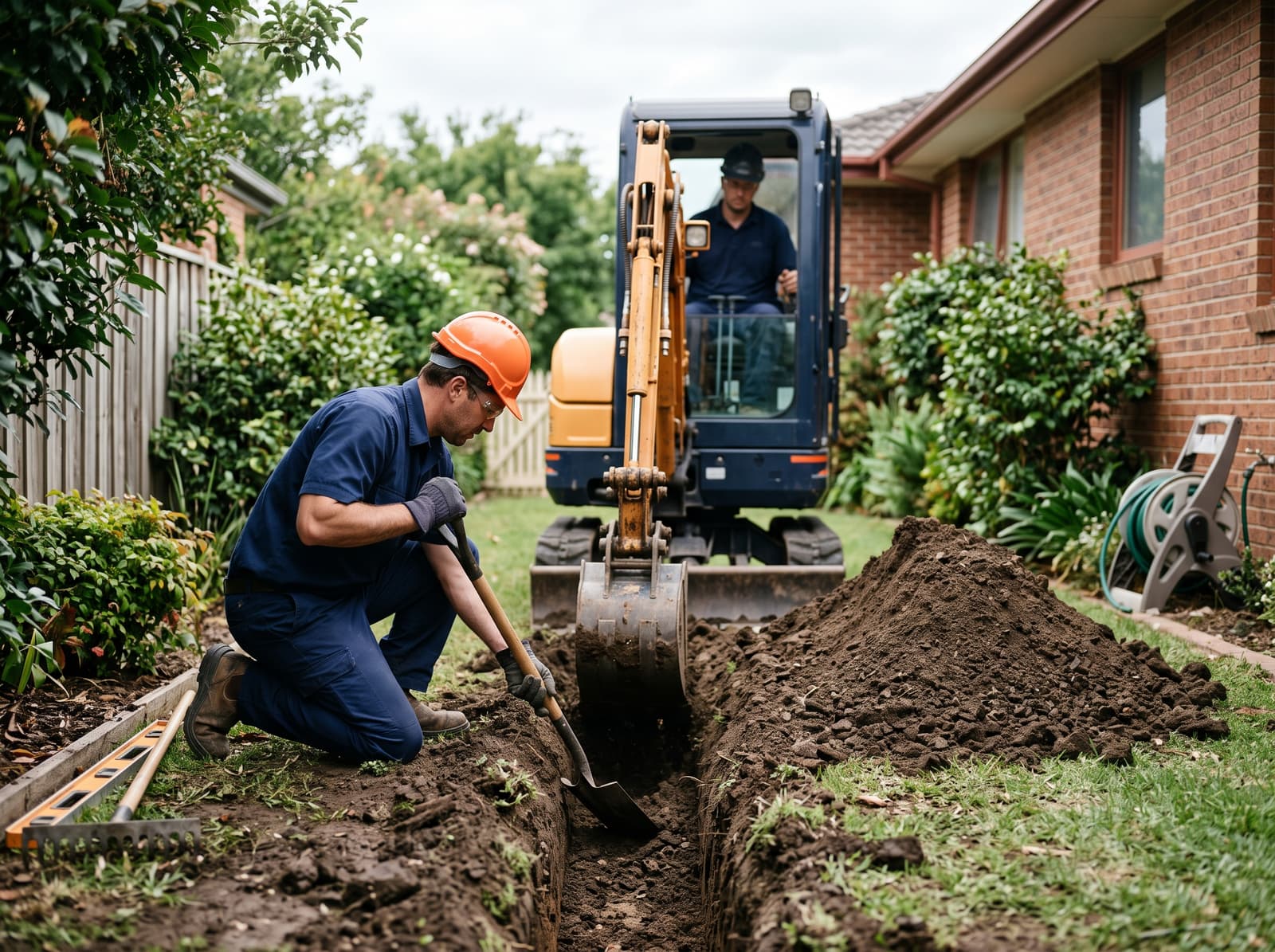
Excavation opens the ground so the crew can see, remove, grade, connect, and test the affected pipe directly. A full trench may follow the damaged run, while a targeted opening may expose one joint or short section.
Direct access is useful when the defect cannot be fixed from inside the pipe. The crew can rebuild bedding under a low section and correct the slope. It can also replace a collapse or make a connection that trenchless equipment cannot reach.
The tradeoff is surface disturbance. Landscaping, concrete, sprinklers, driveways, and access routes all need to be planned before digging. A controlled excavation should start with a defined target, buried-line markings, and a clear surface-repair plan.
Camera evidence comes before the trenchless sewer repair vs. excavation decision
A repair plan should answer three questions:
- Where is the defect?
- What kind of defect is it?
- How much of the line is affected?
A sewer camera inspection can show cracks, offsets, roots, buildup, and standing water. It can also show changes in material or a section the camera cannot pass. A locator can help mark key findings at the surface.
Camera footage has limits. It does not show soil support around the line or guarantee the condition of every hidden connection. It does provide a better basis than a repeat clog alone. If buildup prevents a clear view, cleaning may be needed before the final repair scope is set.
Conditions that may fit a trenchless approach
Trenchless repair may fit when the line follows a known path, access is available, and the pipe condition is compatible with the proposed method. Examples can include:
- Cracks or leakage in a line that still holds its basic shape.
- Root intrusion through joints after roots and buildup are removed.
- A new-pipe route that can follow the existing alignment.
- A pipe beneath landscaping, hardscape, or another surface worth preserving.
- A run with entry and exit access that supports the equipment.
The line normally needs to be cleaned and inspected before lining or bursting. A liner cannot make a badly bellied pipe drain uphill. A bursting head cannot ignore every buried-line crossing or connection. The first review determines whether the method fits.
Conditions that often require excavation
Open access may be the responsible choice when:
- The line is fully collapsed or too deformed for equipment to pass.
- A severe offset blocks the intended route.
- The pipe has a belly or incorrect grade that must be physically rebuilt.
- A connection, transition, or fitting needs direct reconstruction.
- The existing route conflicts with another buried line or structure.
- Soil, depth, access, or pipe condition rules out the available trenchless method.
Excavation is not a failure of planning when the ground itself must be corrected. It is the method that provides control over alignment, bedding, grade, and connections. Jetstar's plumbing excavation service is tied to a defined underground repair rather than exploratory digging.
Utah property factors that shape the plan
Utah and Salt Lake County properties vary widely. A line under open lawn has different access than one under a driveway, patio, mature landscape, or narrow side yard. Depth changes equipment, safety, and how much soil must be managed. Rocky or compacted ground can affect either approach.
Public lines must be marked before excavation. Private lines, such as sprinklers or utilities for a detached building, may need separate locating. Compare the sewer route, cleanout, and connection points with those markings before opening the surface.
Weather and site drainage also matter. A repair plan should account for how exposed soil will be managed and how the area will be restored. These details do not decide trenchless versus excavation by themselves, but they affect whether a proposed method is practical on the property.
Compare the whole scope, not one appealing feature
"Less digging" sounds simple, but homeowners should compare what each plan includes. Ask the contractor to explain:
- Which repair method is proposed and why the pipe qualifies.
- Where access points or trenches will be located.
- What footage or locating evidence defines the damaged section.
- How branch connections, transitions, and the building connection are handled.
- How the repaired line will be tested or camera-verified.
- What backfill and surface repair are included.
- What condition would require the method to change after work begins.
Clear answers help separate a method-based pitch from a property-based plan.
Verification closes the loop
The work is not complete just because the pipe is covered. A repaired gravity sewer should be checked for alignment, joints, flow, and camera-visible condition where practical. Surface repair should follow the agreed plan after the underground work is checked.
For a targeted repair or broader sewer line repair and replacement, ask to review the evidence before and after. The goal is to understand what changed and why the selected method addressed the actual defect.
Let the pipe and property choose the method
Trenchless sewer repair vs. excavation has no universal winner. Trenchless work can preserve more of a property when the line qualifies. Excavation is necessary when direct access, grade correction, or full removal is the sounder route. A good plan explains the disqualifiers as clearly as the benefits.
If camera findings point to a sewer repair, contact Jetstar Plumbing and Drains. We serve Pleasant Grove and communities across Utah and Salt Lake counties. We can connect the footage, location, access, and pipe condition to a repair approach that fits the property.
Need this handled?
See our sewer line repair & replacement service.