
Learn the warning signs of tree roots in a sewer line, how roots enter existing defects, what camera footage shows, and why cleaning may not finish the repair.
Tree roots in a sewer line rarely begin as a tree simply crushing a perfect pipe. Roots usually find moisture through an existing crack, loose joint, or failed connection. Once inside, they spread through the opening, catch paper and debris, and create a blockage that returns after temporary cleaning. Utah homeowners can watch for the pattern, but a camera is what connects the symptom to the actual entry point.
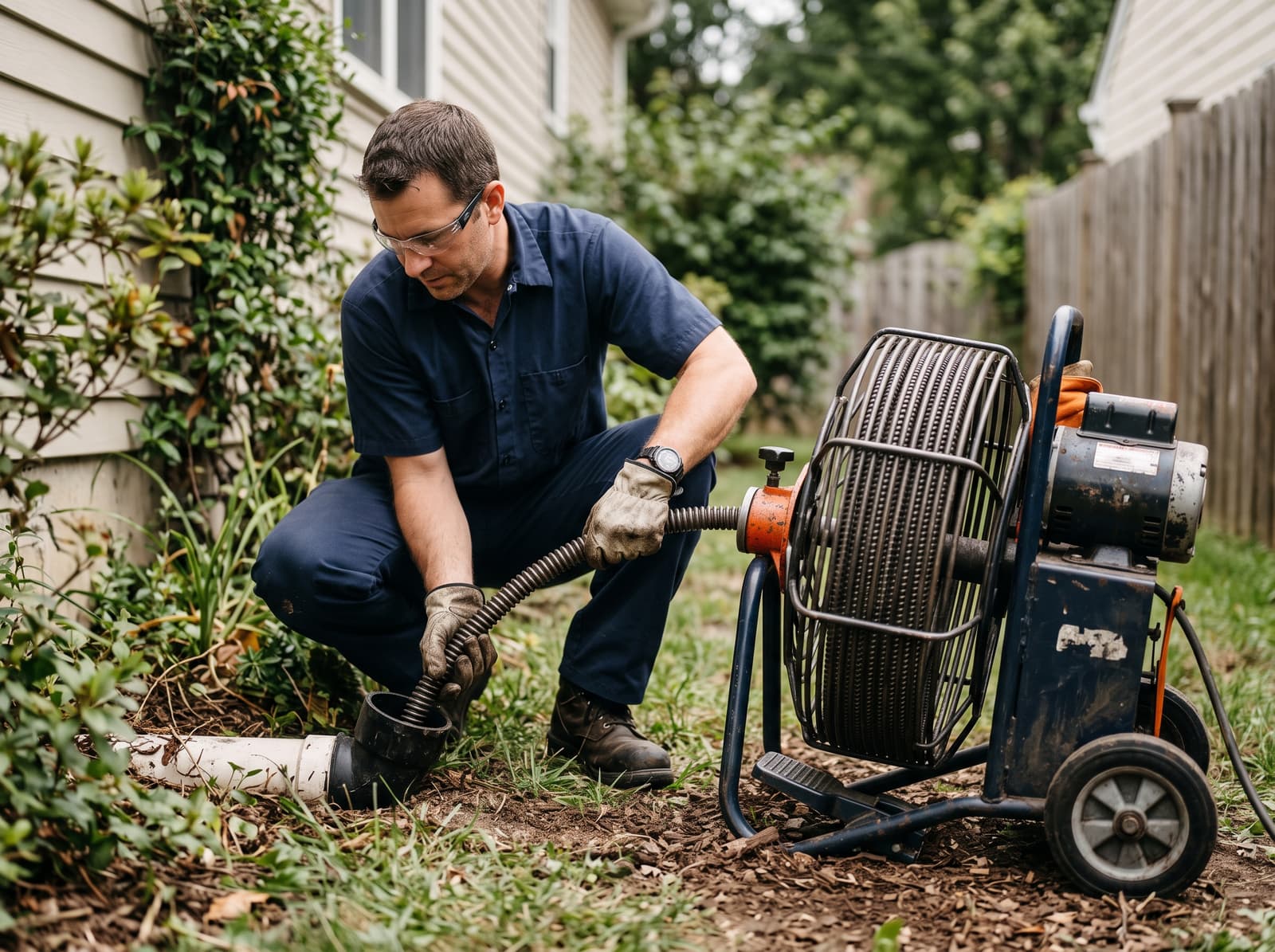
How roots enter a sewer lateral
Roots grow toward available water and oxygen in the soil. A sound sewer line is meant to contain wastewater, but older joints, cracks, offsets, and connection defects can release moisture or make an opening. Fine roots enter first. As they grow, the mass becomes dense enough to slow solids and paper moving through the line.
This distinction matters because root cutting and pipe repair solve different parts of the problem. Cleaning removes the obstruction so the line can drain. Repair addresses the opening that allowed the roots in. One service may be appropriate immediately, while the other depends on the pipe condition and how the problem is likely to recur.
Mature trees near the sewer route raise the possibility, but tree location alone is not proof. The lateral route may differ from what a homeowner expects, and root entry can occur far from the trunk. Camera footage and locating provide better evidence than removing a tree based on a guess.
Warning sign 1: the main line keeps backing up
A one-time blockage can come from what went down the drain. A blockage that returns at the same main-line location suggests an unresolved condition. Roots, heavy buildup, a low section, or a damaged joint can all produce that pattern.
Pay attention to timing. Did the line stay clear for years and then begin clogging every few months? Did previous cleaning recover root fragments? Was a camera used after the line opened? Service history can show whether the work repeatedly restores flow without identifying why the same spot catches material.
If several fixtures are affected together, compare the symptoms with our guide to a fixture clog versus a main-line problem. Tree roots in a sewer line affect shared drainage, not only one sink trap.
Warning sign 2: low fixtures gurgle when water runs elsewhere
Air needs a path through the drainage system. When a partial obstruction narrows the main line, water moving through it can push or pull air through nearby traps. A basement floor drain, first-floor toilet, or tub may gurgle when a washing machine drains or an upstairs toilet flushes.
Gurgling does not identify roots by itself. Grease, scale, a foreign object, poor venting, or another line condition can create similar symptoms. It does tell you the problem may involve more than the fixture making the sound.
If wastewater rises from a low drain, stop using water and arrange emergency drain service. Continuing to run fixtures adds volume behind the obstruction.
Warning sign 3: cleaning equipment brings back root material
Roots recovered on a cable are direct evidence that roots reached the line. The next question is where they entered and what the pipe looks like around that point.
A sewer camera inspection can document accessible root intrusion, cracks, separated joints, standing water, or a section the camera cannot pass. The line may need cleaning first so the camera has a clear view. After roots are removed, the footage should focus on the entry area instead of treating a flowing pipe as proof that the structure is sound.
Ask for a plain explanation:
- At what distance did the roots appear?
- Could the location be marked at the surface?
- Was one joint affected or a longer section?
- What material and condition were visible?
- Did the camera reach the connection or end of the accessible route?
- Does the line need monitoring, spot repair, or broader replacement?
Warning sign 4: yard changes align with the sewer route
Unusually damp soil, settling, or a patch of growth along the sewer route can support the case for an underground leak. These clues have other explanations, including irrigation, drainage, grading, and seasonal moisture. They should be compared with the camera and located pipe route.
Do not dig near a suspected sewer or utility line without proper locating. A surface mark is a diagnostic clue, not a safe excavation plan.
Cleaning methods address different root conditions
A cable with the appropriate cutting head can cut root material and reopen the line. Hydro jetting may flush loose roots, sludge, and debris from a pipe that is suitable for high-pressure cleaning. The method should follow pipe condition, access, and the type of obstruction.
Sewer line cleaning restores flow and creates access for better inspection. It does not seal a crack or reconnect an offset joint. If the opening remains, roots can return. The follow-up decision should be based on the defect rather than a promise that one cleaning lasts a certain amount of time.
When the pipe itself needs attention
Repair becomes part of the conversation when footage shows a defined structural opening, recurring root entry, separation, collapse, or another condition that cleaning cannot correct. A single located defect may fit a targeted repair. Damage across a longer run may require a broader replacement plan.
The camera should set the scope. Sewer line repair and replacement should connect the visible condition to the selected method, access, excavation needs, and verification after the work.
Avoid assuming that every root finding means the entire line must be replaced. Also avoid assuming that regular cutting is a permanent repair. The pipe condition, recurrence, and extent decide where that line sits between monitoring and replacement.
What not to send down the drain
Chemical root treatments and drain cleaners can carry pipe, safety, and wastewater concerns. Do not mix products or use a treatment as a substitute for identifying a damaged line. Follow product labels and local requirements, and keep people and pets away from any wastewater backup.
The U.S. Environmental Protection Agency lists blockages and line breaks among causes of sanitary sewer overflows. Its sanitary sewer overflow overview also explains why wastewater backups can threaten health and property. An active sewage backup needs immediate control, not another round of household chemicals.
Break the cycle of clearing the same blockage
Tree roots in a sewer line are both a cleaning issue and evidence of an opening. Removing the root mass restores flow. Finding the entry point explains whether the line can be monitored, repaired in one location, or needs more extensive work.
If your main line in Pleasant Grove, American Fork, Lehi, Orem, Provo, Draper, Sandy, or Salt Lake City keeps backing up, contact Jetstar Plumbing and Drains. We can clear the accessible obstruction, camera the line, and explain whether the result points to maintenance or repair.
Need this handled?
See our sewer line cleaning service.