
Compare hydro jetting vs. snaking for Utah drain problems, including what each method removes, when pipe condition matters, and why diagnosis comes first.
Hydro jetting vs. snaking is not a contest between a strong tool and a weak one. Each method solves a different kind of drain problem. A cable can break through a concentrated obstruction, while a hydro jet can scour buildup from the inside of a suitable pipe. The useful question for a Utah homeowner is not which tool sounds more powerful. It is what is blocking the line, where the restriction sits, and whether the pipe is healthy enough for the proposed cleaning method.
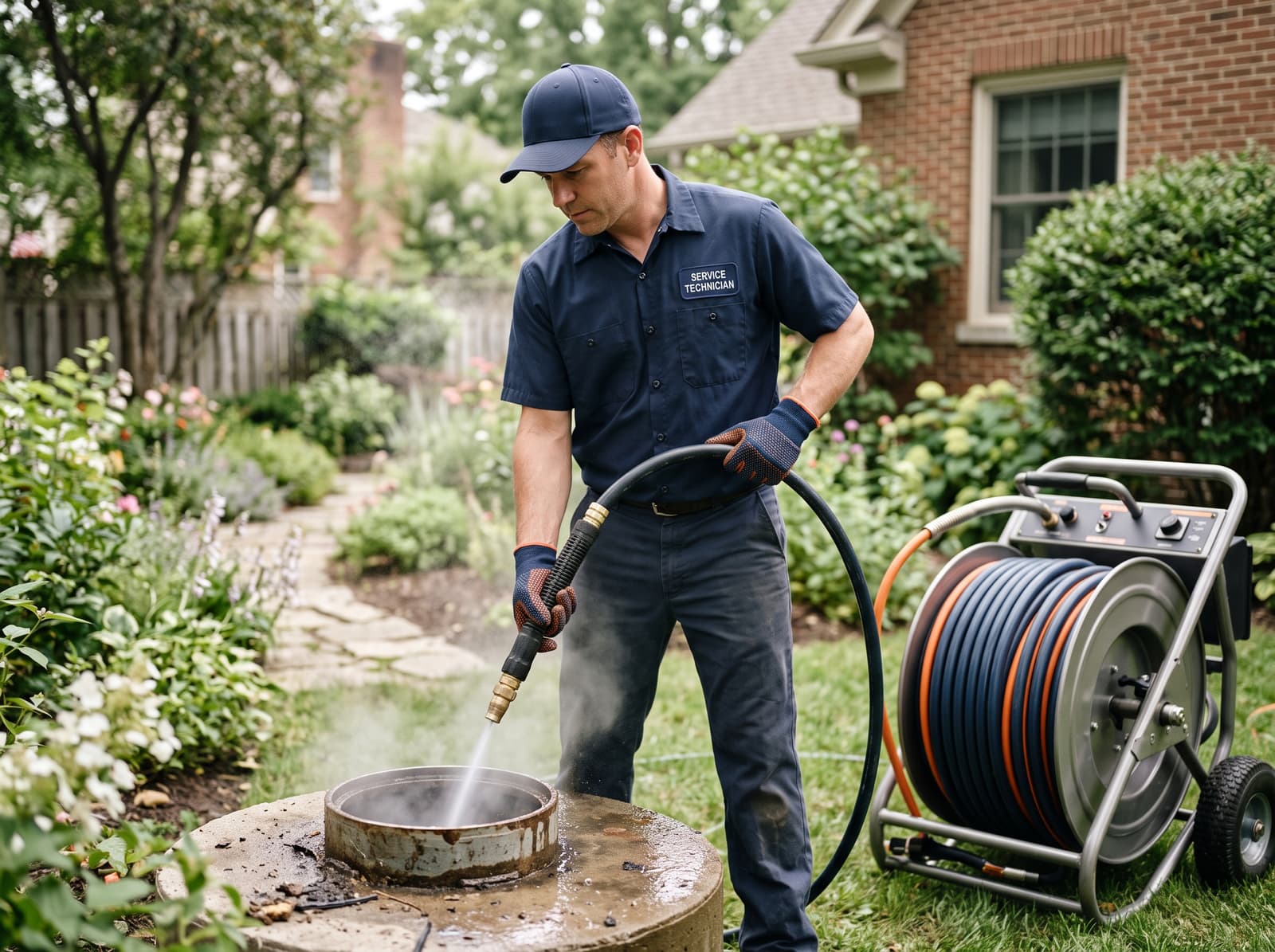
The short answer: opening a clog versus cleaning the pipe wall
A drain snake, also called a cable machine or auger, sends a rotating cable through the line. The head cuts into or pulls apart the obstruction so water can move again. It is often a practical first choice for hair, paper, a local blockage, or a single fixture that suddenly stopped draining.
Hydro jetting uses a controlled stream of water through a specialized hose and nozzle. The rear-facing jets move the nozzle through the pipe and wash loosened material back toward the access point. Instead of making a path through the middle of buildup, jetting can remove grease, sludge, mineral scale, and root fragments from more of the pipe wall.
That difference matters when the same line keeps clogging. If a cable opens a narrow channel through material that still coats the pipe, the drain may work for a while and then slow again. If the obstruction is a solid object or the pipe itself is damaged, jetting may not be the answer either. Diagnosis has to lead the equipment choice.
When snaking is usually the sensible first step
Snaking fits many everyday drain calls. A cable gives the technician physical feedback about the location and resistance of a blockage, and it can restore flow without exposing a fragile line to high water pressure.
Common situations where snaking may fit include:
- One sink, tub, or toilet is affected while nearby fixtures drain normally.
- The clog appeared suddenly rather than returning on a regular pattern.
- Hair, soap, paper, or a small object is the likely cause.
- The line is older, fragile, or not yet inspected.
- The immediate goal is to open the line so a camera can pass through it.
The one-fixture distinction is useful. If only a bathroom sink is slow, the obstruction is probably in that fixture's branch line. If the toilet, tub, and floor drain react together, the shared main line deserves attention. Our guide to telling a fixture clog from a main-line problem explains that pattern in more detail.
When hydro jetting may solve the deeper problem
Hydro jetting becomes more useful when buildup covers a longer section of pipe or clings to the wall. Grease-heavy kitchen lines are a good example. A cable can create an opening, but it may leave a layer of grease that catches new debris. Jetting is designed to wash that layer out when the pipe can safely handle the process.
It may also fit when:
- A main line slows or backs up repeatedly after conventional cleaning.
- Camera footage shows grease, sludge, or scale narrowing the line.
- Roots have been cut and loose material needs to be flushed out.
- A high-use property needs a more complete line cleaning.
- A technician needs a clean pipe wall for a clearer follow-up inspection.
This is why hydro jetting is often paired with diagnosis instead of sold as a one-size-fits-all upgrade. The nozzle, water pressure, pipe diameter, access, and pipe condition all shape the work.
Pipe condition guides the hydro jetting vs. snaking decision
High-pressure water should not be used blindly. A line with a collapse, severe offset, open joint, or weakened wall may need repair before aggressive cleaning. Older material is not automatically unsafe, but age alone does not tell the whole story. A sound older line and a damaged newer line require different decisions.
A sewer camera inspection can show accessible conditions such as roots, standing water, heavy buildup, separated joints, or a section the camera cannot pass. It does not make every condition visible, but it gives the technician better evidence than symptoms alone.
The safe sequence is straightforward:
- Identify which fixtures are affected.
- Locate a suitable cleanout or access point.
- Restore enough flow for inspection if the line is fully blocked.
- Review the pipe condition and likely obstruction.
- Match the cleaning method to that evidence.
- Test drainage and verify the result.
That sequence keeps the conversation focused on the line rather than the machine.
Utah conditions that can change the decision
Homes across Pleasant Grove, Lehi, Orem, Provo, and the Salt Lake Valley do not all have the same pipe material or service history. Some properties have newer plastic sewer laterals. Established neighborhoods may have older sections, mature trees, or joints that admit roots. Utah's mineral-rich water can also leave scale in smaller drain lines and plumbing fixtures over time.
Those conditions create different blockage patterns. Grease tends to coat a kitchen line. Roots enter through an existing opening and return until that opening is addressed. Scale narrows a pipe gradually. A bellied or poorly graded section holds water and solids even after cleaning. Hydro jetting can remove material, but it cannot correct a broken joint, a collapse, or improper slope.
That is the information gain homeowners need from a service visit: not simply that the line was cleared, but what caused the restriction and whether cleaning addressed the cause.
What to tell the technician before service
A short symptom history can make the first assessment more accurate. Note whether one or several fixtures are affected, which drain reacts first, how quickly the problem returned, and whether previous service used a cable, camera, or jet. If you know where the cleanout is, share that too.
Stop using water if sewage is rising from a floor drain, tub, or toilet. The U.S. Environmental Protection Agency notes that sewer overflows can threaten public health as well as property, so an active wastewater backup is different from an ordinary slow sink. See the EPA overview of sanitary sewer overflows for the public-health context.
Choose the method after the line tells the story
Hydro jetting vs. snaking comes down to obstruction type, pipe condition, and cleaning goal. Snaking can be exactly right for a local blockage. Jetting can be the better fit for recurring buildup in a sound line. Camera evidence may show that neither cleaning method can fix a structural problem.
If a drain in Pleasant Grove or elsewhere in Utah or Salt Lake County keeps returning to the same slow or backed-up state, schedule drain and sewer service with Jetstar Plumbing and Drains. The goal is to choose the method from evidence, clear the line, and explain what the result means for the next step.
Need this handled?
See our hydro jetting service.