
Troubleshoot low water pressure in a Utah home by separating one-fixture problems from whole-house changes, then checking valves, leaks, and the service line.
Low water pressure in a Utah home becomes easier to diagnose after one question. Is it weak at one fixture or throughout the house? A single slow faucet usually points to the fixture, aerator, valve, or nearby supply. A sudden whole-house change can involve the main shutoff, pressure regulator, service line, or utility supply. Sorting the symptom before replacing parts keeps a simple restriction from becoming an unfocused plumbing project.
First test: one fixture, one side, or the whole house
Check several locations rather than judging from one shower. Test hot and cold water at a kitchen faucet, bathroom sink, tub or shower, and an outdoor faucet if weather allows. Note whether the pressure is weak everywhere, only on hot water, only on cold water, or only at one fixture.
The pattern narrows the likely system:
- One faucet or shower: Look at the aerator, showerhead, local shutoff, connector, and fixture cartridge.
- One room: Check the branch supply and every fixture on that branch.
- Hot water only: Focus on the water heater, hot-side valves, and hot-water piping.
- Whole house: Check main valves, pressure control, active leaks, the property service line, and water-provider conditions.
- Only during busy use: The issue may involve available flow, pipe size, simultaneous demand, or a restriction that becomes obvious under load.
Write down whether the problem started suddenly or developed slowly. Sudden changes often follow plumbing work, a valve change, a water shutoff, or a leak. Gradual decline fits mineral buildup, corrosion, or a part that is wearing out.
If low water pressure affects one fixture, start at the outlet
Aerators and showerheads collect mineral scale and debris. Remove the aerator if its instructions allow, inspect it, and compare flow briefly without it. Clean or replace the part as directed. Do not damage the finish or force a fitting that will not turn.
Check the fixture shutoff valves under the sink or behind the toilet. They should be fully open unless there is a reason to isolate the fixture. A kinked supply connector or failing cartridge can also restrict flow.
The U.S. Environmental Protection Agency notes that calcium buildup can restrict faucet flow. Its WaterSense home maintenance guide recommends checking for that buildup. The guide also describes testing home service pressure at a hose bib with other water uses off.
If cleaning the outlet restores normal flow, the home does not have a whole-house pressure problem. If the fixture remains weak while nearby fixtures are normal, faucet and fixture service can focus on the local components.
If hot pressure is weak, compare every hot fixture
Low flow on the hot side only points away from the city supply and toward the water-heating system or hot distribution. Confirm whether the pattern affects all hot fixtures or just one.
A partly closed valve, a restricted connector, sediment, scale, or an internal heater condition can reduce flow. Do not adjust safety components or open a water heater without following the unit's instructions. Gas, electricity, hot water, and stored pressure make heater diagnosis different from cleaning a faucet aerator.
Low hot-water flow may appear with popping, leakage, or reduced capacity. Review our guide to water heater sediment signs, then arrange a complete heater inspection.
If the whole house is weak, check the simple controls first
Find the main shutoff valve and confirm it is fully open. If a valve was recently used, it may not have been reopened completely. Do not force an old or corroded valve. A damaged valve can turn a pressure check into an active leak.
Ask whether neighbors have the same change or whether the water provider reports work in the area. Provider-side conditions are outside the property system, so local plumbing repair will not correct them.
Many homes have a pressure-regulating valve, often called a PRV, where water enters the property. A PRV reduces and stabilizes incoming pressure. It can fail or drift, but a homeowner should not assume that every pressure change means the regulator needs replacement. A pressure reading, symptom pattern, valve check, and leak check provide the evidence.
Rule out a hidden leak with the meter
Turn off faucets, appliances, irrigation, and other water uses. Record the water-meter reading, wait without using water, and read it again. Movement suggests water is flowing somewhere on the property side of the meter.
Look inside for running toilets, damp cabinets, water-heater leakage, and appliance connections. Check outside for irrigation problems, wet ground, or a strip of yard that stays saturated. The EPA explains this no-use meter check and other leak-detection steps.
Meter movement does not prove the buried service line is broken. It shows that water use needs to be traced. A toilet, irrigation valve, or hidden indoor leak can move the meter too. Our room-by-room guide to hidden water leak signs can help organize that check.
When the service line becomes a concern
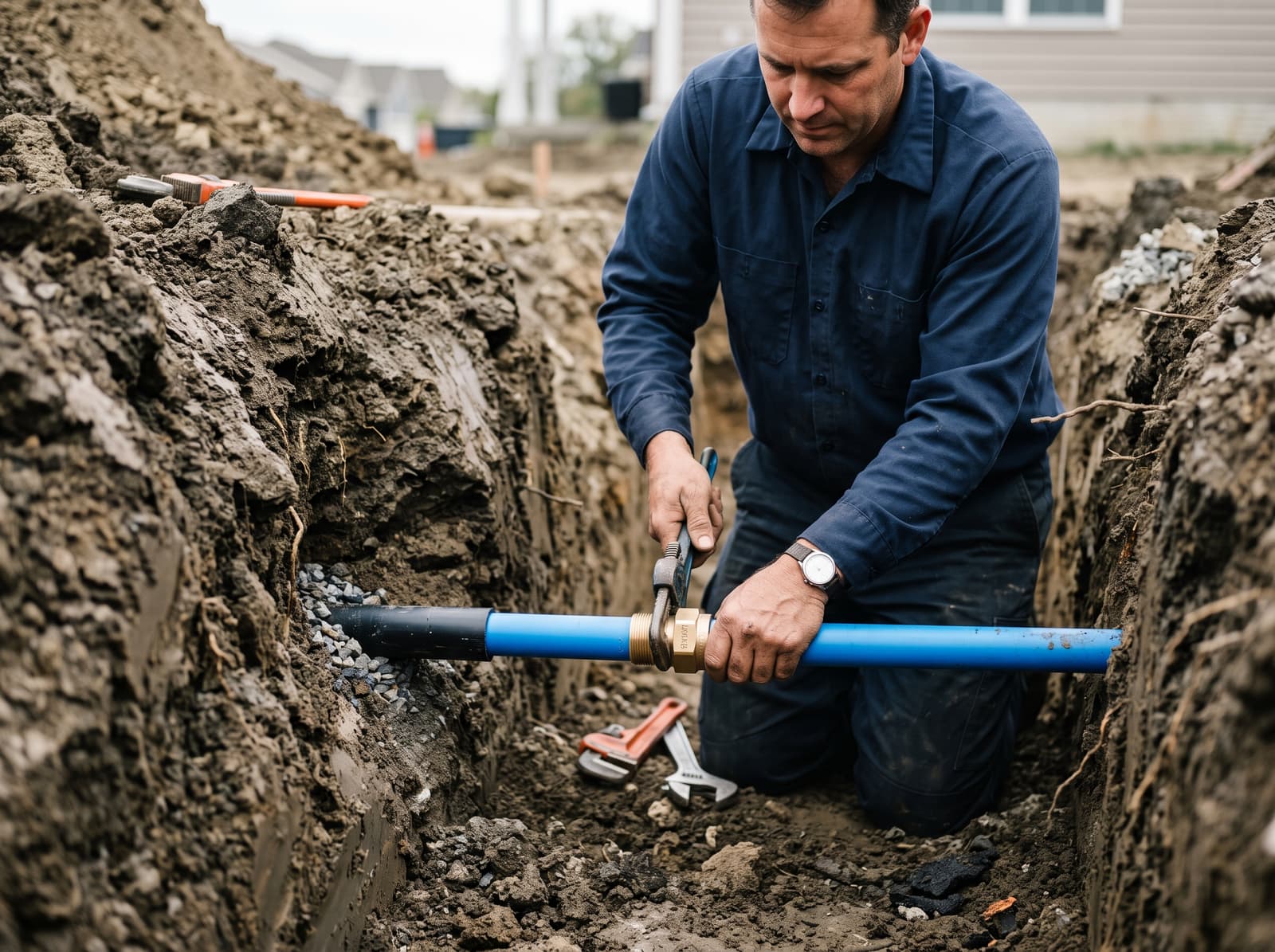
The property service line carries pressurized water from the meter toward the house. A leak or internal restriction can reduce available flow across the building. Supporting clues can include unexplained meter movement or wet soil along the route. A whole-house pressure change or a history of line failures adds more context.
Before any digging, the diagnosis should separate the service line from irrigation, indoor plumbing, valves, and pressure regulation. If evidence points underground, water line repair and replacement should be planned around locating, access, utilities, and the confirmed condition.
Avoid shortcuts that hide the real cause
Do not increase regulator pressure simply because a shower feels weak. If an aerator is clogged, a valve is restricted, or a leak is active, raising pressure does not correct the defect. It can place more stress on the system.
Do not compare pressure only by how forceful water feels at one outlet. Pressure and flow are related but not identical. A small opening can create a sharp stream while delivering little water. A high-flow fixture can also feel different from an efficient one at the same service pressure.
Use a gauge only if you know how to connect it safely and interpret the reading. One static measurement is useful, but pressure during water use and the location of the test can add context.
Turn the pattern into a focused diagnosis
Low water pressure in a Utah home usually becomes clear once the symptom is divided into one fixture, one hot or cold side, one branch, or the whole property. Clean the easy outlet restrictions, confirm valves, check provider conditions, and use the meter to look for hidden flow. Then bring the evidence to the repair.
If pressure has changed across your home, schedule plumbing service with Jetstar Plumbing and Drains. We serve Pleasant Grove, Provo, Orem, Lehi, and Salt Lake County. We can measure the system, trace the likely restriction or leak, and explain the repair that matches the findings.
Need this handled?
See our leak detection & repair service.